

Appearance
Olive Color Code: HEX Code & RGB Code Values
Looking for specific olive color code? Get exact olive hex code #808000 and olive RGB code rgb(128,128,0). Complete color information for design and development projects featuring this earthy, traditional color.
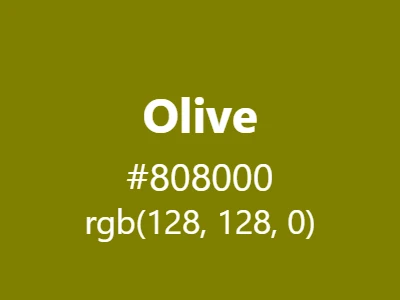
HEX
#808000RGB
rgb(128,128,0)Shades of Olive
Create custom shades of olive with our color generator. Adjust hues, tints, and tones to find the perfect shade of olive for your project.
Shades (Adding Black)
- 808000rgb(128, 128, 0)
- 6A6A09rgb(106, 106, 9)
- 55540Ergb(85, 84, 14)
- 403F0Frgb(64, 63, 15)
- 2D2C0Ergb(45, 44, 14)
- 1B1908rgb(27, 25, 8)
- 000000rgb(0, 0, 0)
Tints (Adding White)
- 808000rgb(128, 128, 0)
- 979439rgb(151, 148, 57)
- ADA860rgb(173, 168, 96)
- C3BD87rgb(195, 189, 135)
- D8D3AErgb(216, 211, 174)
- ECE9D6rgb(236, 233, 214)
- FFFFFFrgb(255, 255, 255)
Tones (Adding Gray)
- 808000rgb(128, 128, 0)
- 817F1Crgb(129, 127, 28)
- 827F31rgb(130, 127, 49)
- 827E44rgb(130, 126, 68)
- 817D56rgb(129, 125, 86)
- 7F7C69rgb(127, 124, 105)
- 808080rgb(128, 128, 128)
Olive Palette
Explore curated and automatically generated color palettes featuring olive. See how it harmonizes with other colors for UI themes, graphics, and branding materials.
Sequential
Single hue gradient for data visualization
7 colors
Lightest
#FEFF42
Light
#D3D32D
Medium Light
#A8A918
Medium
#808000
Medium Dark
#5B5B09
Dark
#38390A
Darkest
#1A1A00
Diverging
Dual hue gradient with a neutral midpoint
9 colors
Base End
#808000
Left Dark
#A09C4B
Left Medium
#BEB882
Left Light
#DAD6BB
Neutral
#F5F5F5
Right Light
#C3B4D8
Right Medium
#9077BB
Right Dark
#593D9E
Complementary End
#000080
Monochromatic
Same hue, different brightness/saturation
5 colors
Lightest
#FFFFFF
Light
#C3BD87
Medium
#808000
Dark
#3E4100
Darkest
#000000
Analogous
Colors adjacent on the color wheel (30° apart)
5 colors
Left Adjacent 2
#800000
Left Adjacent 1
#804000
Main
#808000
Right Adjacent 1
#408000
Right Adjacent 2
#008000
Complementary
Colors opposite on the color wheel (180° apart)
2 colors
Main
#808000
Complementary
#000080
Triadic
Evenly spaced around the color wheel (120° apart)
3 colors
Main
#808000
Secondary
#008080
Tertiary
#800080
Square
Four colors evenly spaced (90° apart)
4 colors
Main
#808000
Right 90°
#008040
Complementary
#000080
Left 90°
#800040
Tetradic
Two pairs of complementary colors
4 colors
Main
#808000
Secondary
#008000
Complementary
#000080
Complementary Secondary
#800080
Split Complementary
Complementary colors ±30°
3 colors
Main
#808000
Split Left
#004080
Split Right
#400080
Cyclic
Circular gradient for periodic data
8 colors
0°
#808000
45°
#208000
90°
#008040
135°
#006080
180°
#000080
225°
#600080
270°
#800040
315°
#802000
Pastel
Soft, desaturated colors for modern UI
6 colors
Light Pastel
#C9C99C
Pastel 1
#D1D1A9
Pastel 2
#D8D8B6
Pastel 3
#DFDFC3
Pastel 4
#E6E6D1
Deep Pastel
#EDEDDE
Common Green Color Codes (HEX & RGB)
Green →
HEX:#00FF00
RGB:rgb(0, 255, 0)
Dark Green →
HEX:#006400
RGB:rgb(0, 100, 0)
Light Green →
HEX:#90EE90
RGB:rgb(144, 238, 144)
Lime Green →
HEX:#00FF00
RGB:rgb(0, 255, 0)
Forest Green →
HEX:#228B22
RGB:rgb(34, 139, 34)
Sage Green →
HEX:#9CAF88
RGB:rgb(156, 175, 136)
Emerald →
HEX:#50C878
RGB:rgb(80, 200, 120)
Kelly Green →
HEX:#4CBB17
RGB:rgb(76, 187, 23)
Mint Green →
HEX:#98FF98
RGB:rgb(152, 255, 152)
Neon Green →
HEX:#39FF14
RGB:rgb(57, 255, 20)
Olive →
HEX:#808000
RGB:rgb(128, 128, 0)
Extract Olive Hex & RGB Codes from Image
Upload a photo to find the exact olive HEX and RGB codes.
click or drag your image here
Supported formats: JPG, PNG, WebP
Olive Color Code Converter
Instantly convert between HEX, RGB, CMYK, and more for olive shades.
All Formats:
- HEX:#808000
- RGB:rgb(128, 128, 0)
- CMYK:cmyk(0%, 0%, 100%, 50%)
- HSV:hsv(60°, 100%, 50%)
- HSL:hsl(60°, 100%, 25%)
What is Olive?
Olive is an earthy, yellow-green color named after the olive tree (Olea europaea) and its fruit. The word "olive" comes from the Latin oliva, which derives from the Greek elaia. Throughout history, olive has been deeply intertwined with Mediterranean culture, symbolizing peace, wisdom, and abundance. In ancient Greece, olive wreaths were awarded to Olympic champions and scholars, signifying victory and intellectual achievement. The olive branch remains a universal symbol of peace today, recognized worldwide as a gesture of reconciliation.
The olive tree itself is steeped in history—it's one of the oldest cultivated trees, with evidence of olive oil production dating back over 8,000 years. The color olive captures the essence of this ancient tree, ranging from the pale green of unripe olives to the deep, rich hue of mature fruit and leaves.
The hex code for olive is #808000, with RGB values of rgb(128, 128, 0). This unique combination—equal parts red and green with no blue—creates its characteristic yellow-green appearance. Its CMYK values (approximately C:0, M:0, Y:100, K:40) emphasize yellow with substantial black ink, producing a rich, earthy olive ideal for print applications.
Olive occupies a special place in the color spectrum—it's neither purely green nor purely yellow, but a warm blend of both. This gives it a versatile, timeless quality that works across design applications from fashion to branding.
Olive vs Similar Colors
Olive occupies a unique earthy territory:
| Color | HEX Code | Key Difference |
|---|---|---|
| Olive | #808000 | Earthy yellow-green |
| Forest Green | #228B22 | Darker, pure green |
| Sage Green | #9CAF88 | Muted, grey-green |
| Army Green | #4B5320 | Darker, browner |
Olive is more yellow than forest green and less grey than sage green. It has a warmer, more earthy character than pure greens.
Color Psychology and Meaning
Olive carries a grounded and culturally rich psychological profile:
Peace and harmony: The olive branch is the universal symbol of peace. In biblical stories, a dove returned to Noah's ark carrying an olive branch, signaling the end of the flood. This association has endured for millennia, making olive a color of reconciliation and hope.
Wisdom and knowledge: In ancient Greece, olive wreaths adorned scholars and philosophers, linking the color to intellectual pursuit and enlightenment. The olive tree's longevity—some living over 2,000 years—further reinforces this connection to timeless wisdom.
Abundance and fertility: The olive tree is a symbol of plenty, providing oil, food, and wood. Its ability to thrive in challenging conditions represents resilience and prosperity. Olive groves have sustained civilizations for centuries.
Tradition and heritage: Olive is deeply rooted in Mediterranean culture and history. From the olive oil used in sacred rituals to the olive wood used in craftsmanship, the color evokes tradition and timeless elegance.
Stability and reliability: Olive's earthy quality gives it a grounded, dependable feel. It's often used by brands that want to convey trustworthiness and longevity.
Natural healing: Olive oil has been used for medicinal purposes since ancient times, giving the color associations with healing, wellness, and natural remedies.
Using Olive in Design
Olive's earthy character and cultural resonance make it a versatile choice:
Web and UI Design: Olive works exceptionally well for heritage brands, food products, and wellness platforms. Its warm undertones create inviting interfaces that feel grounded and trustworthy. Consider using olive as a primary color for organic food websites, wellness platforms, or cultural institutions. Pair with cream or terracotta for natural designs, or with deep blue for a Mediterranean-inspired palette.
Graphic Design: Olive is ideal for food packaging, particularly for olive oil, wine, and Mediterranean cuisine. It's also well-suited for historical materials, educational content, and eco-friendly branding. Olive pairs beautifully with warm neutrals, deep blues, and burnt oranges.
Fashion and Interiors: A timeless color for casual wear, military-inspired fashion, and accessories. In interiors, olive creates cozy, welcoming spaces with a touch of rustic charm. It works beautifully as an accent wall color or in upholstery, particularly when paired with natural materials like wood and linen.
Branding: Many food and beverage brands incorporate olive into their identities, especially those focused on Mediterranean cuisine, organic products, and artisanal goods. The color conveys authenticity, tradition, and natural quality—qualities that resonate with modern consumers seeking genuine, sustainable products.
Editorial Design: Olive is a popular choice for book covers in genres like historical fiction, travel writing, and cookbooks. Its earthy quality adds warmth and depth to literary works.
Color Harmony and Combinations
Olive's warm, earthy quality makes it highly versatile in color combinations:
Monochromatic: Pair olive with lighter yellow-greens and deeper olive tones to create depth and visual interest. This scheme works beautifully for organic brands and nature-inspired designs.
Complementary: Rust or burnt orange provides vibrant warm contrast, creating balanced and eye-catching combinations. This pairing is popular in Mediterranean design and autumn-themed projects.
Analogous: Sage, moss, and amber create cohesive schemes that feel natural and earthy. These combinations are ideal for wellness brands, spa environments, and outdoor gear.
Neutral grounding: Cream, beige, and terracotta keep olive grounded and sophisticated. This combination is timeless and works well in traditional and contemporary designs alike.
Mediterranean palette: Olive pairs beautifully with deep blue, evoking the colors of the sea and landscape. This combination is classic and widely used in coastal design.
Woodsy combinations: Olive pairs well with warm browns and tans, creating cozy, rustic atmospheres perfect for cabin decor and outdoor branding.
For accessibility, olive (#808000) on white achieves approximately 4.5:1 contrast — meeting WCAG AA standards for normal text. When using olive as text, ensure proper font sizing for optimal readability.
Frequently Asked Questions
What is the olive hex code?
The olive hex code is #808000. This earthy yellow-green is widely used in design, branding, and fashion for its timeless appeal.
What colors go well with olive?
Olive pairs beautifully with cream, beige, rust, burnt orange, terracotta, and deep blue. For a Mediterranean-inspired palette, combine olive with navy and warm neutrals.
Is olive the same as sage green?
No. Olive (#808000) is more yellow than sage green (#9CAF88), which has grey undertones. Olive has warmer, earthier qualities while sage green is cooler and more muted.
What are the RGB values for olive?
The olive RGB code is rgb(128, 128, 0). This unique combination—equal parts red and green with no blue—creates its characteristic yellow-green appearance.
What is olive's CMYK value?
Olive CMYK is approximately C:0, M:0, Y:100, K:40. This formulation produces its characteristic earthy green in print, emphasizing yellow with substantial black ink for depth.
Why is olive associated with peace?
The olive branch has been a symbol of peace since ancient times. In Greek mythology, Athena gifted the olive tree to Athens, and in the Bible, a dove brought an olive branch to Noah, signaling the end of the flood. This association has endured worldwide.
What makes olive different from other greens?
Olive's unique quality lies in its warm yellow undertones. Unlike pure greens like emerald or forest green, olive has a golden hue that gives it an earthy, Mediterranean character. It's warmer than sage but greener than mustard.
Is olive suitable for web design?
Yes, olive is excellent for web design. Its hex code #808000 provides good contrast on white backgrounds (approximately 4.5:1), meeting WCAG AA standards for accessibility.
What emotions does olive evoke?
Olive evokes feelings of peace, wisdom, tradition, and abundance. It's associated with natural healing, stability, and Mediterranean charm, making it a versatile choice for many design applications.